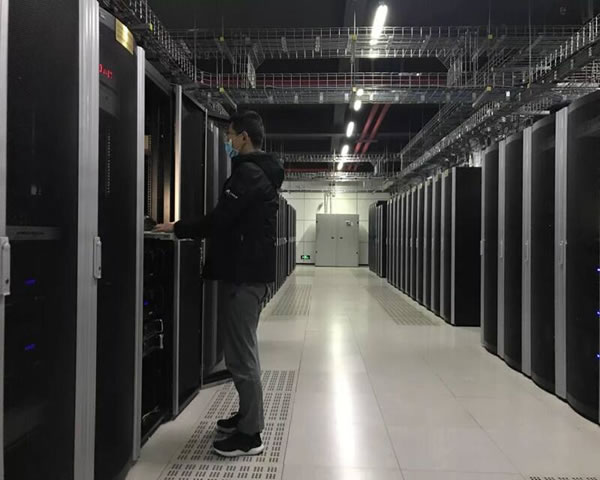
Introduction: Based on systematic field tests and analysis of CN2 VPS Japanese nodes deployed overseas, this paper focuses on two core metrics: access speed and network security, aiming to provide practical assessments and recommendations for operations and decision-making.
What is the CN2 VPS Japan node and its value in overseas deployment
?CN2 VPS Japan nodes typically refer to virtual hosts that use CN2 backbone or optimized routing in Japanese data centers. From the perspective of overseas users, they can reduce delays and improve stability through better routing, making them suitable for services and cross-border acceleration needs for East Asian users.
Overview of the testing environment and methods
Tests employed multi-point parallel sampling: connectivity tests, pinging, traceroutes, and multiple small file downloads were conducted from different operators in Europe, America, Southeast Asia, and China, combined with packet loss and jitter statistics to ensure samples covered common network fluctuation scenarios.
Overall observation of the actual test results of access speed
Overall, CN2 VPS Japanese nodes perform better in latency and jitter near East Asian users, while cross-continental access is still affected by undersea links and interconnections, resulting in limited latency improvement but generally lower packet loss and jitter than unoptimized channels.
Key factors affecting access speed
Access speed is affected by physical distance, submarine line capacity, ISP interconnection policies on both ends, and local export quality; Additionally, VPS instance specifications, bandwidth limits, and concurrency policies directly determine user-perceived performance.
Security assessment: Key points between the network layer and host layer
In terms of security, CN2 VPS Japan nodes need to focus on network layer protection (such as DDoS mitigation and abnormal traffic monitoring) as well as host layer hardening (system patching, intrusion detection, and permission management). Comprehensive protection is indispensable.
Analysis of DDoS and traffic anomaly response capabilities
Excellent Japanese nodes usually have basic traffic cleaning and rate limiting strategies, but in high-intensity or complex application layer attacks, upstream cleaning services and application protection must be combined to form a complete defense line and reduce the risk of business interruption.
Routing stability and performance of packet loss and jitter
Actual tests show that CN2 optimized routing can significantly reduce cross-border hops and lower packet loss rates, but routing strategies can still fluctuate during peak periods or when link failures occur, so monitoring alerts and multipath backup are essential operational and maintenance measures.
Compliance and Data Sovereignty Considerations
When deploying Japanese nodes overseas, attention must be paid to data storage locations and transmission compliance requirements, reasonably planning log and backup locations to ensure business continuity and security compliance while adhering to local regulations.
Optimization suggestion: Increase access speed and enhance security
It is recommended to optimize from multiple aspects: reasonably selecting access points and configuring BGP/multi-line backhaul, enabling CDN or intelligent routing, configuring DDoS protection and WAF, and reducing human configuration risks through automated operations and maintenance, thereby improving stability and security.
Key points of operation and maintenance practice and monitoring indicators
Operations and maintenance should focus on key metrics: latency, packet loss, jitter, TCP retransmission rate, and bandwidth utilization; By combining alerts and automated fallback strategies, the source of the issue can be quickly pinpointed and triggered for link switching or expansion measures, ensuring service availability.
Summary and suggestions
Summary: The CN2 VPS Japan node offers significant stability and speed advantages when accessing East Asia and surrounding regions; However, the effectiveness of cross-continental deployment is limited by the link and interconnection relationships. It is recommended to select nodes based on business distribution, deploy multi-point redundancy, and strengthen network and host protection.
- Latest articles
- What To Do If A Hong Kong Data Center Goes Down, Quickly Pinpoint The Cause And Activate Backup Measures
- Comparing The Advantages And Disadvantages Of Singapore Cloud Server VPS Versus Dedicated Servers Helps You Make A Choice
- Testing The Security And Access Speed Of CN2 VPS Japan In Overseas Deployment
- When Choosing A List Of Hong Kong Server Hosting Providers, Consider Network And Security Capabilities
- Best Practices For Isolation Strategies And Network Security For Taiwan-native IP Virtual Machines In Multi-tenant Environments
- SS Hong Kong CN2 VPS Recommendations: The Best SS Hong Kong CN2 VPS For High-frequency Application Scenarios
- User Experience Optimization: Singapore Server Cloud Server Access Acceleration Combined With CDN Integration Solution
- Enterprise-level Service Evaluation: In-depth Analysis Of Cambodia VPS Stability And Scalability
- Where Can You Find A Variety Of Billing Options For Vietnam Cloud Servers? To Meet Different Budget Needs
- Enterprise Migration Guide VPS Software Vietnam Practical Data Backup And Fault Recovery Manual
- Popular tags
-

Steps And Experience Sharing For Accessing Site N Using Japanese Native Ip
this article will share the specific steps and experience of using japanese native ip to access the n site to help users achieve smooth access. -

Network Settings And Optimization Suggestions For Simulator Japanese Native Ip Used In Automated Testing
this article introduces how to perform network settings and optimization suggestions on the simulator's japanese native ip in automated testing, covering practical points such as topology, dns, proxy selection, bandwidth delay management, security compliance, and monitoring integration. -
Explain Why The Japanese Server’s Ip Address Is Shown As Us
this article analyzes why the ip address of a japanese server is displayed as the united states, discusses related technologies, causes and impacts, and helps you better understand the relationship between the geographical location of the server and the ip address.